
The best community content ideas share one thing: they give members an easy reason to post, not just read. Give people a simple prompt tied to something they already care about, keep a steady weekly rhythm, and reward the folks who show up. Below is a starter set of ideas plus a schedule you can run without burning out.
A quiet community is not a broken one. It usually just lacks a reason to speak. Members will lurk happily for months until you hand them a low-effort, high-payoff prompt. Your job is not to fill the feed yourself; it is to make posting feel obvious and rewarding. Let's get into what actually works.
1. Start with prompts your members can answer in one sentence
The biggest killer of engagement is a prompt that requires effort. "Tell us your full skincare routine" gets crickets. "What is the one product you'd repurchase forever?" gets replies. Keep the barrier to entry near zero.
Great low-effort prompts include:
- This or that: "Morning coffee or afternoon? Show us your mug."
- Fill in the blank: "I never leave the house without ___."
- Hot take: "Unpopular opinion about our category. Go."
- One photo: "Drop a pic of where you keep your gear."
If a member can reply from their phone in ten seconds while standing in line, you have a winner.
2. Turn customer questions into a weekly Q&A
Every store gets the same questions over and over in email and DMs. Instead of answering privately for the hundredth time, post them where the whole community can see and weigh in. Tag these as Question so they are easy to browse later.
This does two things. It saves you repeat support work, and it invites experienced customers to answer before you do, which is where the magic happens. When a real member tells a newcomer how to size a product or care for it, that carries more weight than anything you could say. It also builds a searchable knowledge base that quietly reduces your support load month after month.
3. Run Show and Tell to unlock free user-generated content
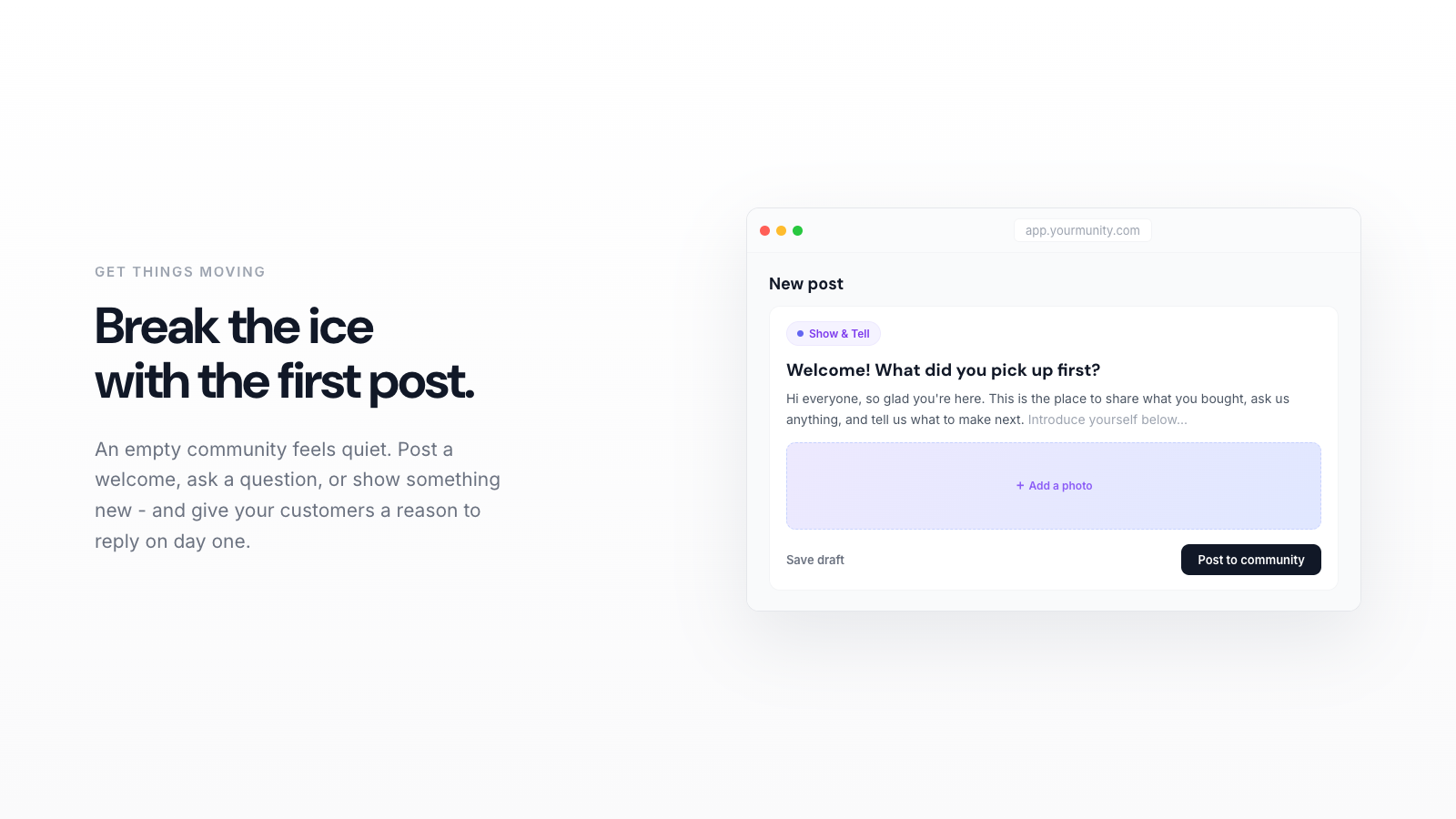
Show and Tell is the single most valuable content type you can encourage. Ask members to post how they actually use, style, or display what they bought. Real photos from real people beat studio shots for trust, and you now own a growing library of authentic content you can feature.
Make it easy to start:
- Pick a simple theme: "Show us your setup" or "How you styled it this week."
- Post one example yourself so people know what good looks like.
- React to and comment on every early submission so posting feels seen.
- Feature a favorite at the top of the feed each week.
When members see their post celebrated, others follow. That flywheel is what keeps a community engaged long after launch week.
Yourmunity is free right now. Add your community to your Shopify store in minutes and start turning buyers into regulars.
Add to Shopify →4. Ask for ideas and actually use one
Nothing keeps a community engaged like the feeling that their voice shapes the product. Post an open Idea thread: "What should we make next?" or "What color are we missing?" Then, and this is the part most brands skip, publicly ship something a member suggested and credit them by name.
You do not need to build a whole new product. Even small wins count: a new scent, a bundle, a restock, a packaging tweak. When members see "You asked, we made it," they stop being customers and start being co-owners. That is the difference between a feed that dies in a month and one that compounds.
5. Feature your top contributors on purpose
A small handful of members will always post more than everyone else. Treat them like the asset they are. Give them a shout-out, a "member of the week" spotlight, or first look at new drops. Recognition is cheaper than discounts and often more motivating.
Watch who those people are. When you can see your top contributors in one place, you know exactly who to thank, who to send early samples to, and who might become an ambassador. These are the people quietly doing your marketing for free.
6. Post reviews as conversations, not just star ratings
A standard review sits on a product page and dies. A Review post inside your community can be replied to, questioned, and voted on. Encourage members to share honest first impressions and let others ask follow-ups. "How does it hold up after three months?" is the kind of thread that sells more than any ad.
Prompt it directly: "Bought something recently? Tell us the honest truth, good and bad." Real, slightly imperfect reviews build far more trust than a wall of five stars, and they give hesitant shoppers the social proof they need to buy.
7. Build a repeatable weekly rhythm
Consistency beats intensity. A community posting once a day for a week and then going silent looks abandoned. A steady, predictable cadence trains members to check back. You do not need seven ideas a day; you need the same few beats every week.
Here is a simple schedule you can steal:
- Monday: Question of the week (easy, one-sentence answer).
- Wednesday: Show and Tell prompt.
- Friday: Feature a top contributor or member post.
- Rotating: One Idea thread or hot take every couple of weeks.
Batch-write a month of prompts in one sitting and you will never stare at a blank feed again.
8. Seed the room so it never feels empty
People do not post into silence. In the first few weeks, invite your most loyal customers directly, ask a couple of friends to reply first, and answer early posts fast. A thread with three comments invites a fourth; a thread with zero invites none.
The onboarding moment matters too. When new members complete a short profile before they post, they arrive with an identity instead of a blank username, which makes them far more likely to actually contribute. A room full of real, named people feels safe to speak in.
9. Let the numbers tell you what to make more of
Stop guessing. Watch which prompts get replies and which get ignored, then do more of what works. Pay special attention to whether active community members buy more than non-members; that single comparison tells you whether all this posting is actually growing the business.
When you can see member versus non-member purchase rate, unique visitors, retention, and who your top contributors are, content planning stops being a vibe and becomes a decision. Double down on the formats that both spark conversation and move sales, and quietly retire the ones that do neither.
Keep it human and keep it going
You do not need clever tactics to keep a community engaged. You need easy prompts, a steady rhythm, and a habit of making members feel seen. Give people a reason to post, celebrate them when they do, and let the data guide your next move. Do that for a few months and you will have something most stores never build: a room full of regulars who show up because they want to.